The Sub-Saharan Africa Teacher Leadership in Education for Sustainable Development (SSATL-ESD) project was featured at the 2026 Copernicus Alliance Higher Education Summit hosted on 26th – 28th of August in Bordeaux in France.
The 2026 Higher Education Summit was organised by the COPERNICUS Alliance, the UNESCO Chair in Training of Sustainable Development Professionals at the University Bordeaux Montaigne, the UNESCO Chair in Responsible Global Management at Bern University of Applied Sciences, the Nouvelle Aquitaine Network of Associations for Development and International Solidarity (RADSI-NA), oikos International and Students Organizing for Sustainability International.
The theme of the summit was “Unleashing transformative and decolonised education for sustainable development”. The summit attracted a diverse international audience of students, educators and changemakers in the field of transformative learning for sustainable development within higher education. It was an opportune space for SSATL partners to share the transformative work happening in the project.

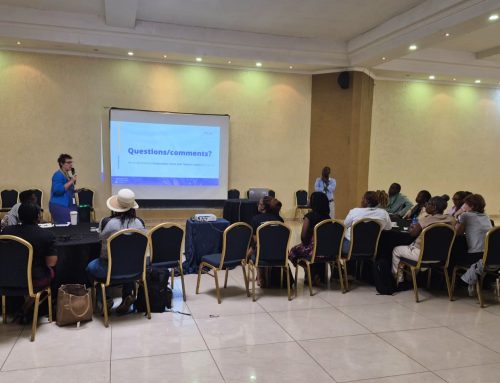
Research partners from University of Lethbridge, Rhodes University, International Association of Universities, and Leuphana University ©Deepika Joon
The Sub-Saharan Africa Teacher Leadership for Education for Sustainable Development is a transformative initiative aimed at strengthening the leadership role of teachers in education for sustainable development (ESD) in the Sub-Saharan Africa (SSA) region. Building on 30+ years of research and practice into ESD and teacher education led by African and European partners, this transnational collaboration between 15 institutions from SSA and Europe aims to strengthen teacher leadership, particularly in the field of education for sustainable development, to promote curriculum innovation and transformative pedagogy.
The SSATL partners at the summit, Deepika Joon, from Leuphana University in Germany, and Zintle Sogqwaru-Kangumu, from Rhodes University in South Africa, presented on how ESD is integrated in Teacher Education policies and frameworks in Sub-Saharan Africa. The presentation shared findings of a cross-country policy review that was done in 2025 in Kenya, Malawi, Namibia, South Africa, and Zambia to explore ESD integration in Teacher Education policies and frameworks. The presentation revealed that although national strategies and national development plans across the five countries showed a commitment to ESD integration in education, there was still a persistent gap between strong commitments to ESD and its implementation in teacher competences and professional development. The presentation shared key recommendations for integrating ESD into teacher education across Sub-Saharan Africa, aligning national priorities with regional and global quality education goals, and highlighted the role of teacher leadership in advancing transformative, decolonised sustainability learning. Main features of the ESD Continuing Professional Development as developed by Rhodes University on its online platform were shared. The project seeks to work with 400 teacher educators in the region to strengthen ESD implementation.

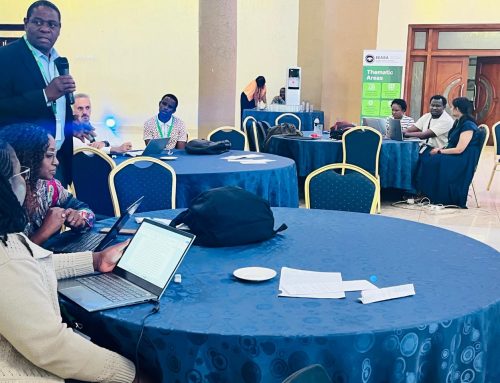
Zintle Songqwaru and Daniel Fischer giving a closing Keynote speech of the Summit ©Deepika Joon
About the Sub-Saharan Africa Teacher Leadership for ESD Project
This project is led by Leuphana University and co-funded by the European Commission’s Erasmus+ programme. It is also supported by regional partners and African universities who are offering co-funded support and support in kind for dimensions of the programme not costed into the EU budget. The project makes an important contribution to SDG 4.7 through building capacity in teacher trainers on ESD leadership.
Should you have any further questions, please write to unescochair@leuphana.de